In 2020, the owner of a shuttered building on Calle Fortaleza, once home to a school called Colegio de Párvulos, pulled two stained-glass windows out of the facade. The building had been closed since 2010. The windows were original. Within weeks, the Instituto de Cultura Puertorriqueña had opened a fine against the owner and moved to revoke the project's endorsement, with two ICP conservation architects, Carmen Marla López and José Silvestre, confirming on the record that the work violated historic zone regulations.
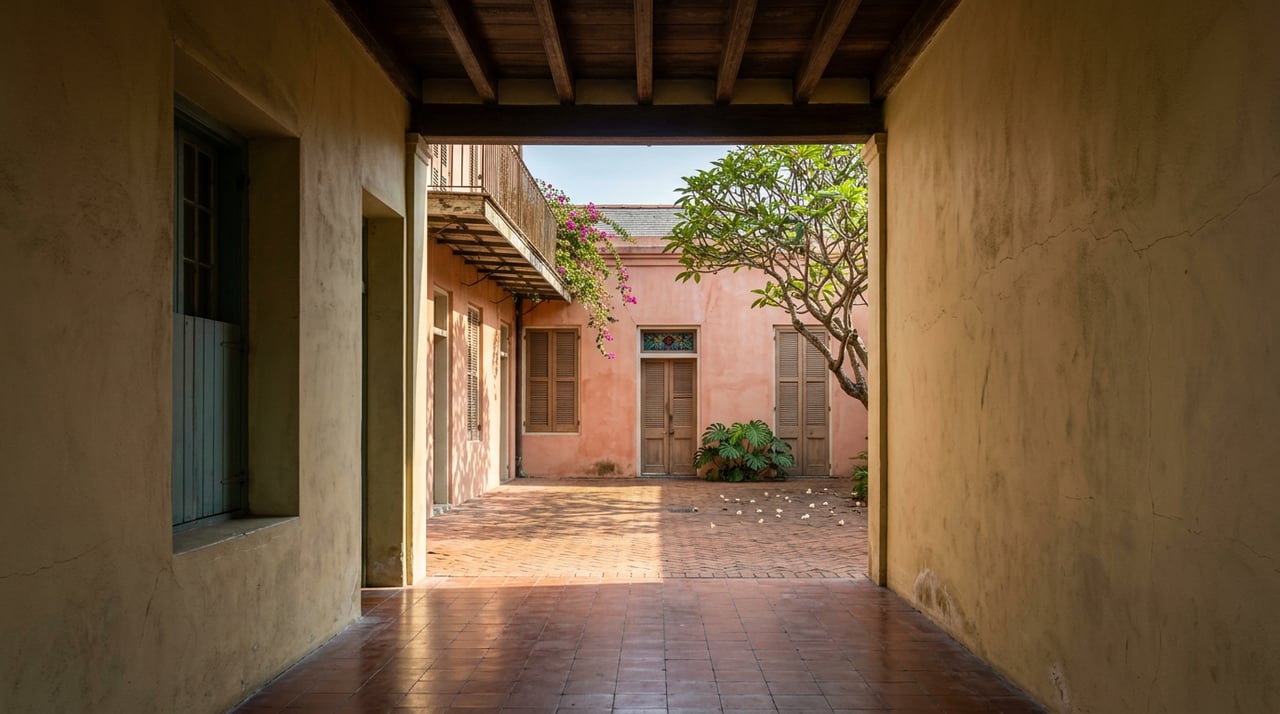
That case is the plainest illustration of something that gets glossed over in most Old San Juan property descriptions. The colonial facade, the courtyard, the thick masonry walls that make these homes desirable also make them legally encumbered in a way that a condo in Condado or a villa in Dorado simply isn't. Ask most buyers what that means and they'll say something about needing a permit for exterior work. What they usually don't know is that the tax incentive built into every one of these listings runs through two separate government approvals before a dollar is exempted, and that the agency enforcing the rules has told its own reporters it's doing so with four people.
The Assumption Baked Into the Listing
Old San Juan real estate marketing leans hard on the historic zone tax exemption. It's a real benefit, rooted in a 1955 law, Ley Núm. 7, that lets an owner who restores or rebuilds a property inside a designated historic zone apply for full exemption from property taxes on that structure. The pitch usually stops there, as if approval were a formality attached to the address.
It isn't. The statute is explicit about the sequence. A property only qualifies once its restoration plans and specifications have been approved by both the Instituto de Cultura Puertorriqueña and the Administración de Reglamentos y Permisos. Only after that dual sign-off does the Secretary of the Treasury declare the building exempt. Two agencies have to agree on the same set of drawings before a third one touches the tax roll.
There's a second wrinkle worth knowing before you assume the exemption is a settled fixture of Old San Juan ownership. When the 2019 Incentives Code folded Puerto Rico's older economic development laws into one framework, lawmakers had to introduce a bill in 2020, sponsored by Senator José Nadal Power, specifically to keep this 1955 benefit from lapsing for restoration work started after the changeover. That a sitting senator had to file legislation to preserve continuity tells you the benefit has never been the kind of thing you can take for granted from a listing sheet. It's administered case by case, and its terms are worth confirming with a tax professional and the Departamento de Desarrollo Económico y Comercial before it factors into anyone's budget.
On Paper vs. In Practice
| What most buyers assume | What the process actually requires |
|---|---|
| Historic tax exemption applies automatically to any restored property in the zone | Requires joint approval from ICP and ARPE before Hacienda will declare the exemption |
| ICP review is a formality for cosmetic sign-off | ICP evaluates plans against preservation criteria and can deny, modify, or revoke endorsement |
| Permits mean the project is compliant going forward | ICP has documented owners obtaining a permit, doing unapproved work anyway, and treating the resulting fine as cheaper than compliance |
Four Architects, One Walled City
Here's the number that should reset expectations more than any other. In comments to El Vocero, an architect tracking the historic zone said that facade impacts, meaning unauthorized or non-compliant changes to a building's exterior, had climbed sharply over the previous six years, with roughly 108 cases logged in a single recent month alone. When the paper asked ICP directly how it was keeping up, the agency's own written response confirmed its Programa de Patrimonio Histórico Edificado employs four conservation architects to review and enforce standards across the entire historic district.
That ratio matters more to a buyer than it sounds. It means the real risk in Old San Juan renovation work isn't getting stopped before you start. It's what happens after. The same reporting described a pattern where owners obtain a permit, complete work that departs from what was approved, such as removing a sol trunco, swapping a wood door, or pulling iron balusters, and then treat the resulting fine as a cheaper outcome than doing the restoration correctly. With four people covering the whole zone, that bet sometimes pays off. When it doesn't, as the Colegio de Párvulos case shows, the agency can revoke the very endorsement that made the tax exemption possible in the first place.
What the Windows Actually Cost
Go back to that Fortaleza street building for a moment, because the mechanics of the fine are the part most buyers never see coming. The stained-glass windows weren't decorative extras. They were part of the approved historic record for the structure. Removing them didn't just draw a fine, it triggered a formal revocation of the project's ICP endorsement, the same endorsement that a Hacienda tax exemption depends on. For an owner counting on that exemption as part of the property's economics, losing the endorsement isn't a paperwork inconvenience. It's the incentive itself disappearing.
The Title Has Its Own Signatures
Renovation approval is only half the friction. Old San Juan properties frequently carry title histories that run back generations, and Puerto Rico's inheritance laws mean a sale can require sign-off from every descendant with a claim on the property, not just the person listed as the seller. Buyers who assume a straightforward closing timeline because the property looks move-in ready are often surprised to learn that a title search on a 200-year-old building can surface heirs who haven't been party to a real estate transaction in decades. This is exactly why an architect and an attorney experienced specifically in Old San Juan, not just Puerto Rico real estate generally, tend to save buyers real time.
Before You Waive the Inspection Contingency
If you're seriously evaluating a historic property inside the walls, line up these four things before you remove any contingencies:
- A preservation-experienced architect who can request a preliminary design meeting with ICP before drawings are finalized, rather than after
- A structural engineer familiar with colonial-era masonry, since load-bearing assumptions in a modern inspection report don't always translate to 300-year-old construction
- A real estate attorney who can run title and confirm whether multiple heirs need to sign off on the sale
- A realistic timeline that assumes ICP and ARPE review happen in sequence, not in parallel, before any exemption application goes to Hacienda
None of this makes Old San Juan a harder place to own property than the incentives suggest. It makes it a place where the incentives are real but conditional, and where the buyers who do best are the ones who verify the condition before they close rather than after.
A Few Direct Questions
Does every historic property in Old San Juan qualify for the property tax exemption? Qualification depends on ICP and ARPE approving the specific restoration or construction plans for that property before Hacienda grants the exemption. It isn't tied to the address alone, and current eligibility should be confirmed with a tax professional and the DDEC rather than assumed from a listing description.
What happens if I do exterior work without ICP approval? Based on documented cases, ICP can issue fines and revoke a project's endorsement, which also removes the basis for any related tax exemption. Interior work that doesn't affect the exterior or historic fabric generally faces a different, lighter review path, but any change visible from the street should go through ICP first.
Buying inside the walled city rewards patience with the process as much as it rewards taste in architecture. If you're weighing a historic property in Old San Juan, or comparing it against options along the north coast, HECO PROPERTIES can walk through what a specific address actually requires before you write an offer. Request a Private Consultation to get a clear read on the property you have in mind.